RYE COMMUNITY CENTRE
A brief History 1969 – 2009
By
Geoff Boudreau
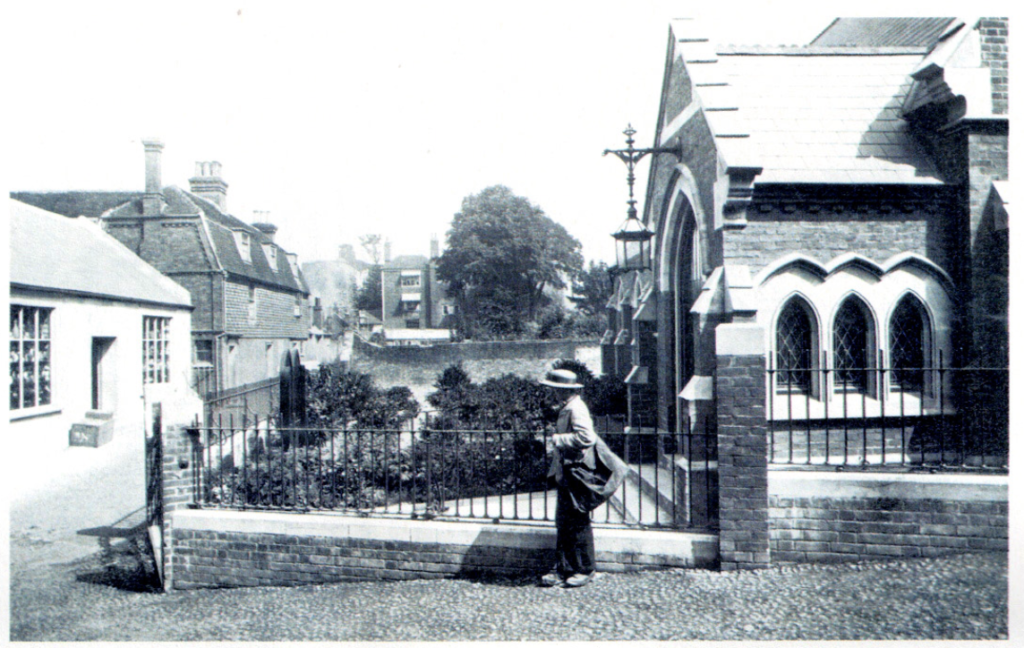
Since 1960, when the monastery in Conduit Fill was closed as a public hall, there was no public meeting place of any size in the town and throughout the 1960’s there were increasing calls for a community centre to be established, notably by Clifford Jordan and other town councillors. In addition, there was an on-going campaign to establish such a centre, led by Rye’s Own magazine, which was by then well established, having been founded in 1965. But who would take the lead and get the ball rolling? As the saying goes “cometh the hour, cometh the man” – and the man in question was the Reverend J. E. R. Williams, the vicar of St. Mary’s, the parish church of Rye.
Rye Community Centre began life in 1804 as the Congregational Church under the ministry of the Revd. Alfred Thomas Saville, who was pastor for over a quarter of a century. The upstairs hall was added in 1894 to provide schoolrooms and a lecture hall. As a church it continued to serve the community for some 85 years before falling into disuse.
In January 1969 he called a public meeting of all interested parties which took place on 4th February at the primary school hall. It was attended by about 200 people and as a result an Exploratory Committee chaired by the Revd. Williams was formed to investigate the “whole matter of a centre in Rye and to report to another public meeting in about 6 months’ time”. That subsequent meeting took place on 8th October that year and the committee’s findings were presented, including the results of a questionnaire which had been sent out to all the local organisations. Of the 29 organisations polled, 27 responded favourably with a resounding “Yes” to the need for a centre and that they would be interested in using it. Only 2 responded with a “Possibly” to the questionnaire and none with a “No”. With this mandate to proceed, the committee investigated various possibilities for either the conversion of a suitable existing building, or for a site for a new one to be built on.
The favourite location quickly emerged as the Congregational Church at the bottom of Conduit Hill. It was rather run down and in need of substantial renovation but was large enough for the purpose and suitable for conversion. The Committee duly contacted the United Reformed Church as owners of the building, to seek their approval in principle to sell or lease the building from them, and this was duly given, providing that the centre retained a small room for religious worship. Estate agents Vidler and Co. valued the building at £10,000 and it was estimated, in addition, that the conversion would cost in the region of £13,500. This figure would include various repairs, an extended entrance lobby, a fire escape, boiler room, kitchen, central heating, etc. This was no mean sum to raise, being perhaps in excess of £150,000 in today’s money.
It was thought that there were possibilities of grants from public bodies which might raise £15,000 or so, but the remaining £10,000 would have to be raised by the long hard slog of fund-raising and by November 1969 6,000 letters inviting membership had been delivered to virtually every house in and around Rye. The cost of a membership subscription was priced at five shillings, or half a crown for the under 18s, and for a minimum donation of £5 one could have life membership.
Almost immediately, funds began to roll in from membership subscriptions, dances, sponsored walks, the local ladies football team, musical events, and even a jumble sale held by the Rye Police Force! A year later in November 1970, £1,066 had been raised and this figure was immediately matched by an anonymous donation from a gentleman whose imagination was captured by this ‘historic figure’. The mystery gentleman was revealed many years later to be Christopher Davson, a life-long supporter of the Centre.
By March 1971, £3,000 had been raised and the Rye Community Centre Association commenced renting the premises with the hope that one day it would be able to afford to buy the freehold of the building. Volunteers immediately set about renovating and converting the building and one month later the first dance was held, followed by the official opening by Mrs. Davey, the Honourable Secretary. During 1971 other organisations began to use the Centre and many events took place, discos, “Beat” dances, a Summer Fair, a Sponsored Silence and Ballroom Dancing to the Ted Crouch Quartet.
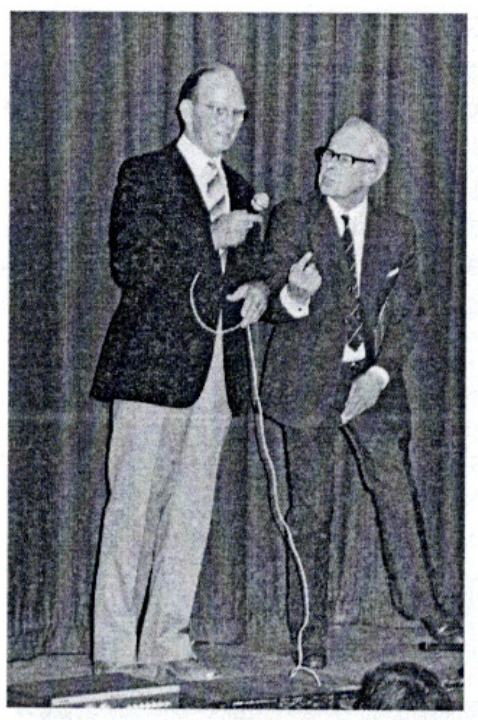
Other regular events which are now only a memory, include the Dog Training Club, the Table Tennis Club, the Mixed Youth Club and Ringo’s Disco. ‘Ringo’ a.k.a. Brian Chapman was one of several characters on the Committee in those early days.
Throughout those first few years with John Williams at the helm, ably assisted by Henry Everest as vice-Chairman, Mrs. Davey as Secretary and N. L. Stroud as Treasurer, the dream became a reality through a great deal of hard work, cajoling and arm-twisting, and a major milestone in the financial fortunes of the Centre came in 1973 with a £7,500 cash grant from the East Sussex County Council which enabled the Association to buy a 99-year lease on the Congregational Church building for £10,000. The tour signatories to the lease were John Williams, Henry Everest, Ralph Wood, architect and Jim Simpson, as solicitor.
In early 1973 Peter Shepherd of architects Le Fevre, Wood and Royle provided advice and plans for the conversion of the hall and the Centre as we know it today began to take shape with the installation of central heating, toilets, a stage and other basic requirements. Meanwhile fund-raising carried on relentlessly with valuable funds being raised from a jumble sale (£29.50), a flag day (£50), a Rye Carnival stall (£7) and a disco organised by “Ringo” (£39). These may be small sums by today’s standards but every penny raised was vital in those early days.
In November 1973 a licence was applied for from the Council to show films at the Centre and by mid-1974 Chris Davson and Robert de St. Croix were delegated to investigate the whys and wherefores of showing films “on the big screen”. It would not be until 21st May the following year that the first film, Von Ryan’s Express starring Frank Sinatra, was shown with 32 people in attendance! It would be another 24 years almost to the day that a new updated Rye Film Club would be founded, currently with over 100 members as it celebrates its 11th birthday, and until recently still using the original cloth-covered wooden screen made by Mr. de St. Croix!
By late 1974 a three-party agreement had been signed by the Community Centre, the United Reformed Church and Woodmill Estates, who had purchased the neighbouring Rye Collegiate School (now the Rye Lodge Hotel) whereby a triangular piece of Community Centre land, adjoining Conduit Hill, would be sold to Woodmill Estates in exchange for £100 plus the agreement to repair within six months the “bulging” boundary wall alongside the roadway to the rear of their property. This piece of land would enable the new owners to improve their vehicular access to the rear of their property. Sadly they never honoured the covenant and two years later went into liquidation. Unfortunately the Liquidator further compounded the situation by transferring the piece of land to the new owners of the school building who thankfully did agree that they had a responsibility to honour the agreement. Unfortunately, they did not carry out any work on the wall and the subsequent owners, the Rye Lodge Hotel, have refused to accept any responsibility for the work.
Luckily in 2006 grants totalling £13,000 were obtained from Rye and Rother Councils towards the rebuilding of a substantial part of the wall, with the remaining £13,000 being paid from Community Centre funds. Perhaps one day justice will be done and the Community Centre will either be re-instated as the owner of the piece of land or some compensation will be made in lieu of it.
In January 1975, Peter Chillingworth, representing Jempson’s Social Club joined the committee and he was to take an increasing part in matters, culminating in his election as the next Chairman, following the resignation of the then Canon Williams in December of that year. Peter Chillingworth went on to serve as Chairman for five years and he remained involved with the Centre until the late 1980s. He saw the Community Centre through more hard times, often struggling to make ends meet, but always at the end of the day striving not just to keep up with on-going building repairs, but also to improve the facilities. He was to be followed by Kathy Varley as ‘chairman’ in 1980.
At that time the committee also included ‘Ringo’ Chapman, with Yvonne Watson as Secretary. Organisations represented on the committee were Jempson’s Social Club, the RX75 Club (Youth Club) and the Inner Wheel. Looking back to that time, it was agreed that the League Against Cruel Sports and the Labour Party would be allowed to hire the Centre for meetings, but a request to hold an antiques fair was turned down as the enquiry was from “traders”. In recent times the distinction between charity and commercial hirers has been blurred and without the revenue generated from rental for events such as antique fairs, keeping out of the red financially would have been much more difficult.
Also at that time Mr de St. Croix reported that the Film Society would be running a summer programme of documentary films rather than feature films. Today’s film club has arrived at the opposite conclusion, showing almost exclusively major feature films. The original Film Society continued until May 1976 until it was wound up due to “poor attendance”, the last film shown being African Queen starring Humphrey Bogart and Katharine Hepburn. Mr. de St. Croix would have been interested to know that the Film Club would be resurrected in 1998 and that his film projector would be replaced by a digital DVD projector and his handmade screen, after more than 30 years, would be replaced in late 2008 with a remote control operated “roller blind” style screen.
In May 1976 the Junior Club, catering for 7 to 12 year-olds was set up, and 146 children “signed up” on the first day of enrolment. It was to be run weekly with regular film shows and discos in addition to outdoor events in the summer. Bingo sessions also commenced at that time with 50 members joining, despite a warning from the caretaker Mr Cogger, that there were not enough tables and chairs to cope with the demand!
Bingo was to continue for another 25 years or so before it became the victim of an aging attendance and the lack of interest from younger people
As the Queen’s Jubilee approached in 1977 it was suggested that marking out a badminton court could be the “Jubilee project”. To this day Badminton remains as popular as ever, with weekly matches being played. It was also suggested at the time that a sign should be erected “at some position in the town for the benefit of strangers” to direct them to the Community Centre. Despite opposition from some quarters over the years, permission has recently been given for a finger post which has finally been erected at the top of Conduit Hill!
1978 saw “Community Offenders” working under the supervision of committee members to decorate the Centre on Sundays and the Junior Club winning “First Special Youth” prize at Rye Carnival for their innovative float. The club went from strength to strength in the next few years with large attendances for occasional film shows such as Watership Down, and Christmas parties. They also provided representatives in the Guard of Honour for the Queen Mother’s visit to Rye in 1980.
In 1979 plans were announced to build “Old People’s Flats” in Turkey Cock Lane opposite the Centre, and in June 1982 Devonport House was officially opened by the Queen Mother on her subsequent visit to Rye. Seating was provided for dignitaries in the Community Centre car park. 1981 brought the sad news that Canon John Williams had died suddenly.
There were immediate discussions of how he could be commemorated, including the suggestion that the Centre be named in his honour. This idea was put to his widow who vetoed it, but eventually some ten years later, a ceramic plaque made by the Cinque Ports Pottery was placed in the foyer in remembrance of John Williams and another person who gave tirelessly of his time and energy, Brian ‘Ringo’ Chapman, himself chairman from 1982 to 1984, – and who had died in 1991.
The following year saw further events which shaped the Centre as we know it today. The Legat School of Dancing closed their dance classes to be quickly superseded by the Rye Dance Centre, led by Jo Haviland (later Jo Fletcher), still teaching Rye to dance after 27 years! It was noted at the time that the “Dance Centre has done the Community Centre a lot of good.” This was somewhat of an understatement as it turned out, as during subsequent years they became the major hirer and financial contributor to keeping Kye Community Centre afloat through more than one recession in the 1980s and 1990s. They also donated thousands of pounds to the Centre from their annual charity events.
1982 also saw the RX75 Youth Club “…going back to the Further Education Centre where there was a billiard table in siti”. Officially the committee was “sorry to lose them” but unofficially there was a big sigh of relief after years of damage to equipment, etc. by members of the club.
The club disbanded the following year, to re-emerge at the Community Centre in the late 1980s before disbanding again when falling victim to the changing demands of youth culture.
With Kathy Varley handing over the reins to “Ringo” in 1982, the system of a 2-year chairmanship was established, with Janet Oliver succeeding in 1984 until 1986, then Margaret Owen until 1988 when David Cade took the helm.
But back to 1983 which saw the institution of the Pancake Race as an annual fund-raising event and indeed £240, a not inconsiderable amount, was raised that year. Sadly, by 1991 the event had fallen by the wayside as had also the Rye Carnival which had featured Junior Club floats representing the Centre. The Junior Club continued to prosper for another six years under the watchful eyes of Yvonne and Morris Metcalf.
Regular users of the Centre at that time included the National Trust, Hastings Stamp Club, the Cinque Port Majorettes, the British Legion, Blackheath Opera, Winchelsea Floral Group, Rye Sea Angling Club and the Arthritis and Rheumatism Council! Variety, it seemed, was the spice of life.
By the late 1980s changes in society were reflected by the “apathetic attitude towards the Centre” as fewer of the traditional users sent representatives to take part in meetings as older supporters were not being replaced by the next generation. From that time there was a gradual transition amongst users of the Centre from clubs and organisations to commercial users leading to today’s quasi-commercial set up.
Autumn 1987 brought the great hurricane, the like of which had not been seen for almost 200 years. 100 mph. winds severely damaged the roof of the main hall which had to be replaced, luckily with the help of our insurers who paid for two-thirds of the cost of repairs. The remainder of the decade featured a string of urgent repairs to roofs, windows and the general structure of the building, and for several years it was a struggle just to make ends meet.
David Cade had been elected Chairman in 1988 and after two years, despite attempting to step down, was persuaded to continue by the committee. He would in fact continue in that role for nine years up to the time when the freehold of the building was offered for sale by the United Reformed Church. 1988 also saw the arrival of Dawn Avery, replacing Yvonne Metcalf as secretary, a position she occupies to this day with a loyalty and diligence so important to the smooth running of the Centre.
Meanwhile, combination of falling demand from traditional organisations, recession and a relentless need to continue repairing the aging structure of the building, left the financial reserves at a dangerously low level. It also meant that the Centre was starting to look somewhat run down, which further exacerbated the reluctance of certain hirers to book the Centre. After all, why should somebody hold a wedding reception or mark a special occasion in a draughty, old- fashioned, run-down converted church building? Nothing much could be done except to soldier on and wait for better financial times.
Furthermore, it was noted that the initial 25 years of the 99 year lease would be up in 1997 and due for review. The fear was that the United Reformed Church might want to replace the existing peppercorn rent with a “rent at the going rate” which it was feared would be extremely difficult to meet. A subsequent exchange of letters with the United Reformed Church helped allay fears of a substantial rise in rent as they were very sympathetic to ensuring the survival of the Community Centre.
By the mid 1990s finances had improved somewhat, and with substantial grants from Rye and Rother Councils contributing £1,700 each, a complete renovation of the kitchen was made possible. Both councils were to figure increasingly in the fortunes of the Centre over the next decade in particular.
The excessive amount of woodworm and dry rot in the kitchen was noted at the time but it was not until the floor started rotting away and the gas cooker starting sinking through it that the scale of the problem was apparent. A further grant of £2,500 from Rye Town Council a few years later was needed to rectify the problem with the installation of a concrete floor.
In keeping with the history of the Community Centre, more problems were never far away when the United Reformed Church, which had all but forgotten of the existence of the building, sent a deputation to visit the Centre and concluded that a letter sent several years earlier, regarding the continuation of a peppercorn rent, should not have been sent and that communication should have been via their solicitors who now raised the question of paying a market rent for the property which could well mean the demise of Rye Community Centre.
Matters took a different direction when in January 1996 a letter was received from the United Reformed Church offering the freehold of the building for “half of the market value”, i.e. £35,000! Despite the daunting nature of such a figure, David Cade contacted Rye Town Council, Rother District Council and the Rural Development Council regarding the possibility of grants towards the purchase, and it emerged that Rye and Rother Councils would be willing to pay one-third each, i.e. £12,000 each towards the costs of the purchase and the legal fees, and the Rural Development Council a further £6,000. David had intended to step down as Chairman by early 1996 but was persuaded by the committee to stay on to see through the intended purchase of the building. At the same time plans were drawn up for the extension and modernisation of the Centre in the hope of obtaining a grant from the Lottery Board.
As the prospect of obtaining major grants became a reality, fund-raising for the shortfall began in earnest, with The Rotary Club, Rye Singers and other organisations offering their help, and very soon hundreds of pounds began rolling in from all directions, but the major step up took place when Paul Blomfield became involved. Through his own generous donation and by hosting a fund-raising coffee morning, he raised a remarkable £6,000 which was followed by a donation of £5,000 from Paul McCartney at Mr Blomfield’s request.
From the mid-1990s The Rye Festival began to use the Centre to a greater extent than previously. That connection has been maintained and enhanced over recent years and currently the Rye Arts Festival holds its A.G.M and Festival launch at Conduit Hill, something that would have been frowned on in the not-too-distant past before the Centre had been modernised and made more user friendly.
In 1997 John Jupp retired as caretaker after seven years of sterling service to be replaced by Kay Skinner who immediately added his substantial maintenance skills to his caretaking. Over the years his work on renovation, in conjunction with Dave Knowles, has transformed the Centre from a dowdy, slightly down-at-heel place into a bright, clean and cheerful venue for its users. By January 1998 after 1 years as Treasurer, Vin Penny stepped down to be replaced by Roy Fletcher, a professional accountant, and by March of that year, Roy was able to report that the Appeal Fund stood at £12,252.98 which meant that the Centre’s share of the purchase money had been raised, with money to spare!
In May 1998, the newly formed Rye Film Club presented its first feature film – Brassed Off – to a capacity audience, and in the eleven years since has gone from strength to strength, having installed state-of-the-art equipment and with more than 900 members. Over that time the Film Club, run by its own separate committee, has screened countless films of a very high standard and in doing so has raised many thousands of pounds for the Community Centre.
By the middle of 1998 the purchase of the building had been completed with a three-way agreement between The Community Centre and Rye and Rother Councils whereby Rye then Rother would be given options to buy the Centre at the then current market value should the Community Centre as a body ever go into liquidation. The funding for the purchase was eventually split, with £10,000 each from Rye and Rother Councils, £6,000 from the R.D.C. and £10,000 from the Community Centre appeal fund.
One parting gift from the United Reformed Church was in regard to a serious sewage leak emanating from the car park. The Victorian sewage pipes were cracking and raw sewage was leaking out above ground level.
Something had to be done urgently and the repair work, costing some £5,000 was completed a week before the completion of the sale with the United Reformed Church generously paying for the work to be done.
Hot on the heels of the purchase there were attempts to prepare a bid for funding from the National Lottery for a substantial extension and modernisation of the building, but unfortunately the costings for the work amounted to a figure in excess of £l million and with a celling of around £300,000 to any Lottery grant, the plan was not feasible.
A pre-requisite of any Lottery application was that planning permission for the proposed works had to have at least been applied for. Plans were duly drafted by Stott and Co. but English Heritage as advisors to the Planning Department in particular were not happy with them, preferring a modern extension which would contrast with the existing red brick Victorian building rather than the preferred red brick extension to blend in with the original. It was subsequently made clear that the Planning Officer was very unlikely to go against English Heritage’s opinions and and would not back the plan preferred by the Committee. After much discussion amongst the Committee and users of the Centre it was clear that everyone preferred the traditional red brick option, and despite the opposition, the original plan was put forward tor approval.
Permission was denied and it was decided to appeal against the decision and in due course the Planning Inspector sat in judgement at Rye Town Hall and both sides put their case. The Community Centre was ably represented by Robert Clay, as surveyor and Mike Stott as architect. The appeal was turned down but after a brief subsequent discussion with the Planning Officer the original plan was agreed providing that half a meter was cut from one side of the planned extension!
It was also announced at that time that a generous benefactor was planning to bequeath £5,000 to the Centre in memory of Canon Williams. The anonymous benefactor, as once before, turned out to be Chris, (now “Sir Christopher”), Davson, who said he was willing to donate the money at any time if required, rather than through a legacy.
He explained that many years ago he had asked his good friend John Williams, which cause he would prefer such a donation to go to – St. Mary’s perhaps? “Don’t worry about St. Mary’s, they can look after themselves,” he replied, “give it to the Community Centre, something close to my heart”. This was duly done following the sad death of Chris Davson in 2005.
By April 2000 the status of the Centre was changed to that of Limited Charity Company and the six initial directors were Doreen Smith, a long time supporter of the Centre, Irene Wright, Steve Blattman, Paul Blomfield, Geoff Boudreau and Roy Fletcher, all of whom have remained as such in the nine years since. The change was effected due to the possible exposure of officers and trustees of the Centre to the prospect of any litigation against them in case of personal injury to the public or employees. The Limited Charity Company allows the trustee directors the protection of limited lability in such matters.
With the completion of the purchase of the building and the subsequent impossibility of raising sufficient funds for the proposed extension and modernisation, it was decided to concentrate efforts on internal improvements and since the turn of the millennium great strides have taken place with a complete renovation of ladies and gents toilets, the replacement of central heating boilers in both main and upper halls, the extension of the stage and, crucially, the remodelling of the foyer to allow for box office and bar facilities.
In January 2001 Rother District Council placed a “dangerous structure” notice on the boundary wall to the south of the building and in doing so closed the fire escape alongside the wall. Thankfully permission was given by the Church of England Trust, as owners of the land next to the wall, to erect a temporary fire escape from the upstairs hall.
At the same time Holden and Partners, Hastings-based solicitors were instructed to try to establish ownership of the boundary wall and negotiations were held with the Church of England and Rye Lodge Hotel to seek a satisfactory solution to the repair of the wall. Unfortunately there was no proof from any quarter regarding ownership and no co-operative way forward to solve the problem was found. In due course the Church of England sold the monastery building and land to a property development company, Starnes Ltd.
Unfortunately both Starnes and The Rye Lodge Hotel were not forthcoming with any funding for wall repairs and the responsibility fell to the Centre to raise funding and effect the repairs.
Summer 2002 brought the sad news of the death of David Cade who had been a Community Centre stalwart for several decades and seen the Centre through some difficult times, but who was always optimistic about its future.
As improvements to the facilities of the Centre continued at a pace, the increased volume of hall bookings meant an improvement in income and when the main hall and the foyer were electrically re-wired at a cost of some £8,500 it was paid for from existing funds. Another, unexpected expense at that time was the removal of the asbestos lining under the stage. Once discovered, it was tested by a specialist company and luckily not considered dangerously toxic but there was no option but to have it removed, which was done swiftly and expertly.
By the early years of the new millennium Kenneth Bird began taking an increasing role in raising funds for the Centre and in the past decade has been single-handedly responsible for accessing many thousands of pounds in grants. Without his help the struggle to improve the Centre would have been much more difficult and protracted.
By 2003 the Rye Players who had in recent years mostly staged their productions at the Thomas Peacocke School, requested the go-ahead to improve the stage at the Centre with a view to making it their permanent home. With the help of substantial funds raised by the Players, the stage was duly enlarged into the wings and with an extendable apron which could be used for larger productions. Within a few years they had also acquired professional stage lighting to be placed in situe courtesy of a Lottery grant of £8,000.
By 2006 changes in the law regarding disabled access to public buildings were due to come into force and in anticipation of the changes, a concrete ramp was put in place at the main entrance to facilitate access especially by wheelchairs. This complemented the “disabled” toilet which had been established many years previously.
Later that year after three decades of discussion, legal opinion, negotiations and frustration, a substantial portion of the boundary wall was finally rebuilt with the aid of substantial grants from Rye and Rother Councils. The next step to complete the project would be to erect a safety barrier alongside the wall and with the determined efforts of Kenneth Bird, further funding was raised to pay for such a barrier.
Predictably life could not be that simple and despite verbal agreements to the erection of the barrier on the south side of the wall on the monastery plot, the new owners, Starnes Ltd. refused to give the go-ahead to erecting the barrier as their future plans for their property were uncertain”.
By the end of 2008, it was proposed to celebrate the 40th anniversary of the Community Centre in 2009. The Centre had arisen from an idea, and progressed to today’s reality of a modern, well run and maintained Centre which holds an increasingly important role in today’s Rye.
Each ‘generation’ of committee members has faced its own challenges, but common to all were the problems presented by an aging building in need of constant repair and renovation. Rye can be justly proud of today’s Centre – clean and attractive, warm in the winter and used as intended all those years ago, by thousands of people, whether locals or visitors. May it prosper for a further forty years, serving the needs of the community.
Its original constitution stated its aims, as a non-political and non-sectarian organisation, “to advance education and provide facilities… for recreation and leisure-time occupations for improving the lives of the inhabitants”. It must be said that it has thus far fulfilled its original brief and as long as people need a place to congregate for leisure, education, sport or entertainment, Rye Community Centre will continue to prosper.